The Art of the Investor Pitch Deck: Crafting a Narrative That Secures Funding
In today's fast-paced business environment, effective communication with potential investors can determine whether a promising venture takes flight or stalls before it truly begins. An investor pitch deck presentation is far more than a slideshow—it is the strategic bridge between a visionary idea and the capital needed to bring it to life. For entrepreneurs, founders, and business leaders, mastering this form of communication has become an essential skill, one that blends storytelling, data, and design into a cohesive argument for investment.
The landscape of fundraising has shifted considerably in recent years. Investors are inundated with opportunities, and their attention spans are limited. A pitch deck must therefore accomplish in minutes what a business plan once achieved in pages: convey the problem, the solution, the market opportunity, the competitive advantage, and the team's ability to execute. This evolution reflects broader changes in how capital flows, how decisions are made, and what information matters most to those holding the purse strings.
Why Investor Pitch Decks Matter More Than Ever
The modern investment ecosystem rewards clarity, brevity, and visual impact. A well-crafted investor pitch deck serves as a decision-making tool that helps potential backers quickly assess whether a venture aligns with their thesis, risk tolerance, and return expectations. It is the first impression that often determines whether a follow-up meeting or deeper due diligence occurs.
Several factors have elevated the importance of the pitch deck in recent years. The democratization of startup funding through angel networks, crowdfunding platforms, and micro-VCs means more ventures are competing for attention than ever before. Simultaneously, remote communication has become standard practice, with many initial pitches delivered via email or video call rather than in person. In this context, a polished, self-contained deck that can be reviewed independently has become a critical asset.
Moreover, the expectations for pitch decks have matured. Investors today look for evidence of product-market fit, scalable acquisition channels, and realistic financial projections—not just enthusiasm and ambition. The deck must demonstrate that the founding team understands the market deeply and has a credible path to growth. This shift has made the structure and content of the deck as important as the idea itself.
The Evolution of the Pitch Deck: From Slide Show to Strategic Document
The concept of presenting a business idea to investors is not new, but the form it takes has changed dramatically. What once might have been a dense, text-heavy document has become a visual narrative built on design principles and cognitive psychology. The best modern decks use imagery, layout, and typography to guide the viewer's attention and reinforce key messages.
This evolution reflects a deeper understanding of how people process information. Investors are not evaluating every detail during an initial review—they are scanning for signals of competence, market awareness, and ambition. A clean, professional design signals that the team values quality and attention to detail. An easy-to-follow structure signals clarity of thought. These signals matter because they often correlate with how a team will operate in practice.
The trend toward remote fundraising has also accelerated the need for decks that stand alone. When a deck is shared via email or a link, it must communicate effectively without a presenter's voice to provide context. This requires self-explanatory slides, logical flow, and enough detail to answer the most common investor questions before they are asked. The deck becomes a proxy for the founder's expertise and credibility.
Practical Implications for Founders and Business Owners
For anyone preparing to raise capital, understanding the practical role of the pitch deck is essential. It is not a comprehensive business plan, nor is it a product demo. It is a targeted communication tool designed to achieve a specific outcome: securing a meeting, advancing due diligence, or closing a round. Each slide should serve a purpose and move the narrative forward.
A strong investor pitch deck typically covers the following areas in a logical sequence: the problem being solved, the proposed solution, the target market size and dynamics, the product or service offering, the business model, the competitive landscape, the go-to-market strategy, the financial projections and key metrics, the team's background and expertise, and the ask—how much funding is being sought and how it will be used. This structure is not arbitrary; it mirrors the mental checklist that experienced investors use to evaluate opportunities.
One common mistake founders make is trying to pack too much information into each slide. The most effective decks use a single core message per slide, supported by visuals or data that reinforce that message. Bullet points are kept to a minimum. Charts and graphs are used to show traction or market potential rather than to impress with complexity. The goal is not to show everything you know, but to show that you know the right things.
Design and Usability: More Than Aesthetic Choices
Design in a pitch deck is not merely about looking good—it is about functionality. Clear hierarchy, readable fonts, high-contrast color schemes, and consistent layout help viewers process information quickly. When slides are cluttered or visually inconsistent, the audience's cognitive load increases, and the core message gets lost. This is why professional templates have become so valuable to founders who may not have a design background.
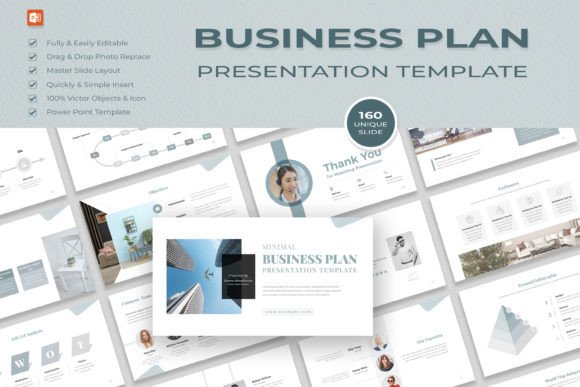
A well-designed template offers practical advantages: it provides a proven structure, ensures visual consistency, and saves time that can be better spent refining content and practicing delivery. The ability to edit slides easily, replace images with drag-and-drop simplicity, and maintain a high-resolution output across devices all contribute to a more professional final product. These features matter because investors notice the difference between a hastily assembled deck and one that has been thoughtfully prepared.
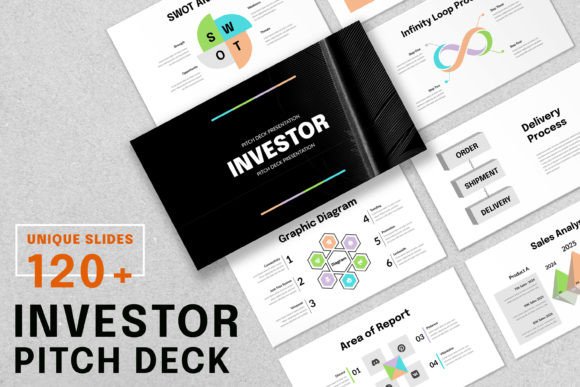
For example, a deck that uses a consistent master slide layout, includes 120 unique slides with varied layouts, and offers compatibility with both PowerPoint and Illustrator gives the founder flexibility to iterate without starting from scratch. The inclusion of documentation and font links further reduces friction, allowing the founder to focus on the narrative rather than technical details.
Market Analysis and Financial Projections: Building Credibility
Investors want to see that a founder understands the market they are entering—not just its size, but its structure, trends, and dynamics. A market analysis slide should demonstrate that the opportunity is real, accessible, and large enough to support a meaningful business. It should also acknowledge competitive realities without being defensive. The goal is to show that you have done the homework and that your assumptions are grounded in evidence.
Financial projections, similarly, should be realistic and tied to specific assumptions about customer acquisition costs, pricing, churn, and revenue growth. Investors are not looking for hockey-stick curves that assume everything goes perfectly; they are looking for thoughtful scenarios that reflect both upside potential and downside risk. A pitch deck that includes clear financial slides signals that the team is financially literate and prepared to manage capital responsibly.
These sections of the deck are where templates can be particularly helpful. A professionally designed layout can present complex data in a way that is easy to digest. Charts, graphs, and tables that are well-formatted and clearly labeled allow investors to grasp key numbers quickly. This efficiency respects the investor's time and demonstrates the team's ability to communicate effectively under pressure.
The Role of the Team in Investor Decision-Making
It is often said that investors bet on people first and ideas second. The team slide is therefore one of the most important in any deck. It should highlight not only the founders' credentials and relevant experience but also their passion, resilience, and complementary skills. Investors want to see that the team has what it takes to navigate the inevitable challenges of building a business.
A strong team slide goes beyond listing past titles or degrees. It conveys why this specific group of people is uniquely qualified to solve this particular problem. It might include brief descriptions of each team member's role, key achievements, or domain expertise. The tone should be confident but not arrogant, and the design should make the information easy to scan. Good templates often provide multiple layout options for team slides, allowing founders to choose a format that best represents their group.
Common Pitfalls and How to Avoid Them
Even with a strong product and a compelling narrative, certain mistakes can undermine a pitch deck's effectiveness. Overloading slides with text is one of the most common issues. When every slide is dense with information, the viewer cannot identify what is most important. Another frequent error is failing to tailor the deck to the specific audience—whether angels, venture capitalists, or strategic partners have different priorities and expectations.
Another pitfall is neglecting the ask. The final slide should clearly state how much funding is being raised, what terms are being offered, and how the capital will be used. Vague or missing asks can leave investors uncertain about how to proceed. The deck should also include a clear call to action: what do you want the investor to do next? Schedule a meeting, review the data room, or connect with a team member?
Finally, consistency matters. Typos, inconsistent fonts, mismatched colors, or low-resolution images all create a perception of carelessness. These details may seem minor, but they accumulate to shape the investor's overall impression of the team's professionalism and attention to detail. Using a well-designed template with master slides and consistent formatting helps avoid these issues and ensures a polished result.
Practical Recommendations for Creating Your Deck
For founders preparing to build or refine their investor pitch deck, a few practical recommendations can make the process smoother. Start by defining the core narrative: what is the story you want to tell, and what is the one thing you want investors to remember? Use this narrative as a guide for selecting which content to include and what to leave out.
Invest time in the first few slides, as they will determine whether the audience continues reading. A strong opening clearly states the problem and hints at the solution without giving everything away immediately. The middle slides build the case with evidence, and the closing slides reinforce the opportunity and the ask.
Leverage templates that are fully editable in widely used formats such as PowerPoint or Illustrator. This allows for customization without requiring professional design skills. Master slide layouts ensure consistency, while drag-and-drop image replacement speeds up the process. Having a large number of unique slides to choose from—such as the 120 provided in a comprehensive deck—gives you the flexibility to create a presentation that feels custom rather than generic.
Test the deck with trusted advisors or mentors before presenting to investors. Ask them to identify any gaps in logic, unclear slides, or unnecessary information. Use their feedback to refine both the content and the design. A few rounds of iteration can significantly improve the deck's effectiveness.
Looking Ahead: The Continuing Relevance of the Pitch Deck
As fundraising practices continue to evolve, the pitch deck remains a cornerstone of the capital-raising process. It is likely to remain so because it fulfills a fundamental need: a concise, portable, and visually engaging way to communicate a business opportunity. While the specific tools and templates may change, the underlying principles of clarity, credibility, and narrative will persist.
For entrepreneurs and business owners, investing in a high-quality pitch deck is not an expense—it is an investment in the ability to tell your story effectively. Whether you are raising a seed round, scaling a growing business, or launching a new product, the deck you present is often the first and most important piece of communication you will have with potential backers. Making it count requires thought, preparation, and the right resources.
A well-crafted investor pitch deck presentation does more than inform—it inspires confidence, builds trust, and opens doors. In a world where opportunities are abundant but attention is scarce, that combination is invaluable. The ventures that succeed are often not the ones with the best ideas alone, but the ones that communicate those ideas most powerfully to the people who can help bring them to life.