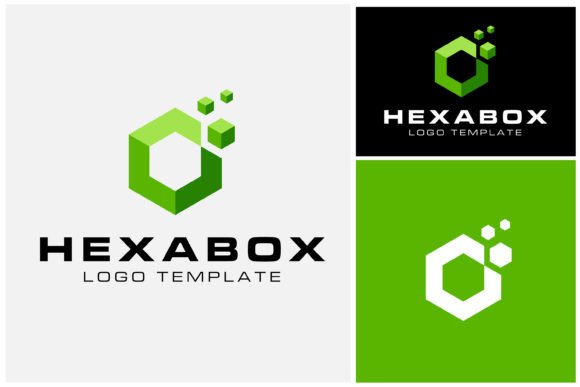
Understanding the Modern Hexagon 3D Box Cube Pixel Logo and Timeless Logo Templates
In the ever-evolving world of branding and visual identity, few elements carry as much weight as a well-crafted logo. It is the face of a business, the first impression, and often the most enduring symbol of what a company stands for. Among the many design trends that have emerged in recent years, the modern hexagon 3D box cube pixel logo stands out as a striking fusion of geometry, depth, and digital nostalgia. When paired with a good-quality, timeless logo template — especially one delivered as a single EPS 10 100% vector file — the possibilities for creating a unique and professional brand mark are virtually limitless.
This article explores the concept behind such a logo template, its key features, why it matters in today’s design landscape, and how you can make the most of it — whether you are a seasoned designer or a business owner stepping into branding for the first time.
What Makes a Logo Truly Timeless?
A timeless logo is one that remains effective and aesthetically relevant for years, even decades, without feeling dated. Think of iconic marks like the Nike swoosh, the Coca-Cola script, or the Apple silhouette. These logos are simple, memorable, and versatile. They are not slaves to passing trends, yet they often incorporate subtle design elements that give them a contemporary edge.
A good-quality, timeless logo template is built on these same principles. It provides a strong structural foundation — clean lines, balanced proportions, and clear visual hierarchy — while leaving room for personalization. The hexagon 3D box cube pixel logo template exemplifies this balance. Its geometric base is classic, while the 3D cube and pixel-inspired details add a modern, tech-forward feel that resonates with digital-native audiences. This combination ensures that the logo does not become stale quickly, and it can be adapted for various media, from business cards to social media profiles to large-format signage.
The Appeal of Hexagon and 3D Cube Elements in Modern Branding
Why hexagons? In nature, the hexagon is a shape of efficiency and strength — think honeycombs or basalt columns. In design, hexagons are versatile because they tessellate seamlessly, evoking a sense of connectivity, structure, and innovation. The hexagon has become a popular motif in tech, gaming, fintech, and creative industries, where it often symbolizes precision, digital architecture, and forward thinking.
Adding a 3D cube element takes this a step further. A 3D box or cube creates depth and dimension, making the logo pop off the page or screen. It suggests solidity, reliability, and a multi-faceted approach to business. When combined with pixel-like detailing, the logo gains a subtle nod to retro gaming and early digital art, which appeals to nostalgia while still feeling modern. This pixel aesthetic, when executed with clean vector geometry, avoids looking cheap or gimmicky — instead, it becomes a sophisticated nod to the building blocks of digital imagery.
Together, the hexagon, 3D cube, and pixel elements form a visual language that speaks to audiences who value both creativity and technical competence. It is a logo that says, “We are built on solid foundations, but we think in fresh, dimensional ways.”
Key Features of a High-Quality Hexagon 3D Cube Pixel Logo Template
When you invest in a logo template, quality matters. A well-made template saves hours of work and provides a professional starting point. The modern hexagon 3D box cube pixel logo template, offered as a single EPS 10 100% vector file, comes with several critical features that set it apart from lower-tier options.
One File, Unlimited Potential
The entire template is contained in a single EPS 10 file. EPS (Encapsulated PostScript) is a vector format that allows you to scale the logo to any size — from a tiny favicon to a massive billboard — without losing quality. Version 10 is widely supported and works well with modern design software. Because it is 100% vector, every curve, line, and shape is mathematically defined, ensuring crisp rendering at any resolution.
Full Customizability in Adobe Illustrator
For the best results, you will want to open the EPS file using Adobe Illustrator. This industry-standard vector editing tool gives you complete control over the design. You can change colors, remove unwanted text, edit curve paths, add or remove elements, and resize or reposition any part of the logo. This level of flexibility means you can tailor the logo to your exact brand colors, industry, and aesthetic preferences without starting from scratch.
Non-Editable Text and Font Considerations
One important detail to understand is that the text in the template is non-editable. This means the words you see in the preview are part of the vector artwork — they are not live, editable text. If you want to create your own text using the same font that was used in the template, you will need to download and install that font separately on your system. This is a common approach in professional templates because it preserves the exact typographic styling while giving you the freedom to write your own brand name or tagline once you have the font installed. Always check the template documentation or product description to find the font name and where to obtain it legally.
Practical Applications and Use Cases
Who would benefit from a modern hexagon 3D cube pixel logo template? The answer is surprisingly broad, thanks to the design’s versatility.
- Tech startups and software companies: The geometric and pixel elements align well with digital products, app development, and IT services. The 3D cube gives a sense of structure and innovation.
- Gaming and esports teams: The pixel nod to early video games makes this style a natural fit for gaming brands. The hexagon can represent a game board or a network of players.
- Creative agencies and design studios: A logo that looks like a piece of modern art signals that the agency understands contemporary visual trends and can deliver cutting-edge work.
- Architecture and engineering firms: Hexagons and cubes evoke structural integrity, precision, and forward-thinking design — perfect for firms that build physical or digital structures.
- Education and tech training providers: The modular, pixel-like appearance can symbolize learning, building knowledge block by block, and embracing digital tools.
In each case, the template provides a credible, professional starting point. With adjustments to color palette, layout, and text, the same base design can take on very different personalities, from corporate and serious to playful and vibrant.
How to Customise the Template in Adobe Illustrator
If you are new to working with vector templates, the process is straightforward. Here is a step-by-step guide to getting the most out of your modern hexagon 3D box cube pixel logo template.
Step 1: Open the EPS File
Launch Adobe Illustrator and go to File > Open. Select your EPS file. A window may appear asking how you want to open it; choose “Open as” and select the appropriate option (usually “Open as New Document” or “Open with Illustrator”). Once opened, you will see all the layers and paths that make up the logo.
Step 2: Understand the Layers
Look in the Layers panel (Window > Layers). You will likely see separate layers for background elements, the hexagon shape, the 3D cube, pixel details, and text. Lock layers you do not want to change to avoid accidental edits.
Step 3: Change Colors
Select the element you want to recolor and use the Color panel or Swatches panel to apply new hues. Because the file is vector, you can quickly update the entire color scheme to match your brand guidelines. Try using a limited palette — two or three colors — to maintain a clean, timeless look.
Step 4: Edit Curves and Paths
If you want to tweak the shape of the hexagon or cube, use the Direct Selection Tool (A) to move individual anchor points or the Pen Tool (P) to add or remove points. This is useful if you need to adjust proportions or create a custom variation of the design.
Step 5: Add or Remove Elements
Want to add a tagline or a small icon? Use the Type Tool (T) to create new text, or import additional vector shapes. If there is a decorative element you do not like, simply select it and delete it. The template is meant to be a starting point, not a final, unchangeable piece.
Step 6: Resizing and Positioning
Use the Selection Tool (V) to click and drag elements to new positions. To scale, hold Shift while dragging a corner handle to maintain proportions. For precise sizing, use the Transform panel (Window > Transform) to enter exact dimensions.
Step 7: Work with Fonts
Since the existing text is non-editable, you will need to replace it with your own. First, identify the font used (check the product description or use WhatFontIs). Download and install the font on your system. Then, using the Type Tool, create your text, apply the font, and position it over or near the original text area. Align it carefully to maintain the visual balance.
Step 8: Save Your Work
Save the file in AI format for future editing, and export versions as PNG or SVG for web and print use. Your custom logo is now ready.
Clearing Up Common Misunderstandings
When working with templates like this, a few points often cause confusion. Let us clarify them.
- “Non-editable text means I cannot change the words at all.” Not true. It means you cannot simply double-click and edit the text in place. Instead, you need to create new text objects using the same font. This is a common practice in professional templates to ensure typographic quality.
- “EPS files are outdated.” While EPS is an older format, version 10 remains widely compatible and is perfectly suited for vector artwork. For most design workflows, it works seamlessly with Illustrator and can be converted to AI, SVG, or PDF as needed.
- “A template is not original enough for my brand.” A template is a foundation. With thoughtful customization — changing colors, adjusting shapes, adding unique text — you can create a logo that is distinctly yours. Many successful brands started from a thoughtfully customized template.
- “Vector means I can just print it without any editing.” Vector means the artwork is resolution-independent, but you still need to adjust colors and text to fit your brand. The template gives you a high-quality starting point, not a finished product out of the box.
The Role of Logo Templates in Modern Business and Creativity
In today’s fast-paced digital economy, not every business has the budget or timeline for a fully custom logo from an agency. This is where high-quality templates shine. They democratize access to professional design, allowing startups, freelancers, small businesses, and even larger organizations to test visual identities quickly without compromising on quality.
The modern hexagon 3D box cube pixel logo template sits at the intersection of several powerful trends: geometric minimalism, 3D depth, and pixel art revival. By choosing such a template, you are not just saving time and money — you are also adopting a design language that resonates with contemporary audiences. It fits into modern life and work because it reflects the way we think about digital spaces: layered, connected, and built from fundamental components.
Whether you are launching a new brand, refreshing an existing one, or simply exploring design possibilities, this type of template offers a solid, flexible, and visually compelling solution. The key is to approach it with creativity and intention — use the template as your canvas, not as a cage.
Conclusion
The modern hexagon 3D box cube pixel logo and good-quality timeless logo template represent more than just a stylish design trend. They embody a thoughtful approach to branding that values structure, adaptability, and enduring appeal. With a single EPS 10 100% vector file, you gain complete control over colors, shapes, layout, and typography — all while working within a proven design framework.
By understanding the features of the template — such as non-editable text requiring font installation, the importance of opening the file in Adobe Illustrator for best results, and the freedom to edit every path and element — you can confidently create a logo that stands out while remaining timeless. For beginners and experienced designers alike, this approach offers a practical, creative, and cost-effective path to a professional brand identity.
Whether you are building a tech startup, launching a gaming channel, or designing a portfolio for your design studio, the hexagon 3D cube pixel logo template gives you the tools to make a lasting impression. Embrace the geometry, add your own story, and watch your brand take shape.